
 (The most important carbon capture tax and cash pay incentive in the world has been upheld by the current U.S. administration and in some cases enhanced. Annually 61 million tons of CO2 are captured and safely stored, a drop in the bucket but Rome was not built in a day. The U.S. carbon capture incentive with IRS Section 45Q continues to lead the world in positive incentives for carbon capture and sequestration. -Editor)
U.S. Preserves and Increases 45Q Credit in “One Big Beautiful Bill Act”
First published by the Global CCS Institute (Carbon Capture and Sequestration)
(Excerpts)
The U.S. government has reaffirmed its bipartisan support for carbon capture and storage (CCS) by preserving – and in some cases increasing – the federal Section 45Q tax credit in the “One Big Beautiful Bill Act,” signed into law by President Trump on July 4, 2025. The Global CCS Institute welcomes this continued support, recognizing the 45Q tax credit as a cornerstone policy crucial for accelerating deployment across the country. Extending it is key to maintaining industrial competitiveness, energy security, and economic resilience.
Global CCS Institute CEO Jarad Daniels said, “Deployment of CCS can strengthen America’s energy future, create jobs, and help solidify its position as a leader in the global low-carbon economy. U.S. policymakers continue their longstanding bipartisan support for CCS by sustaining and raising the 45Q tax credit in the One Big Beautiful Bill Act.”
The bill maintains the 45Q tax credit for point-source capture at $85/ton and direct air capture (DAC) at $180/ton in dedicated geologic storage, preserves transferability, and keeps the inflation adjustment date of 2027 with a base index year of 2025. The tax credit now includes parity for the utilization of carbon dioxide (CO2). In this new bill, CO2 used or converted into valuable products or injected and geologically stored in a qualified enhanced oil recovery or natural gas recovery project site will qualify for the same dollar value credit as CO2 that is permanently sequestered in a dedicated geologic storage site.
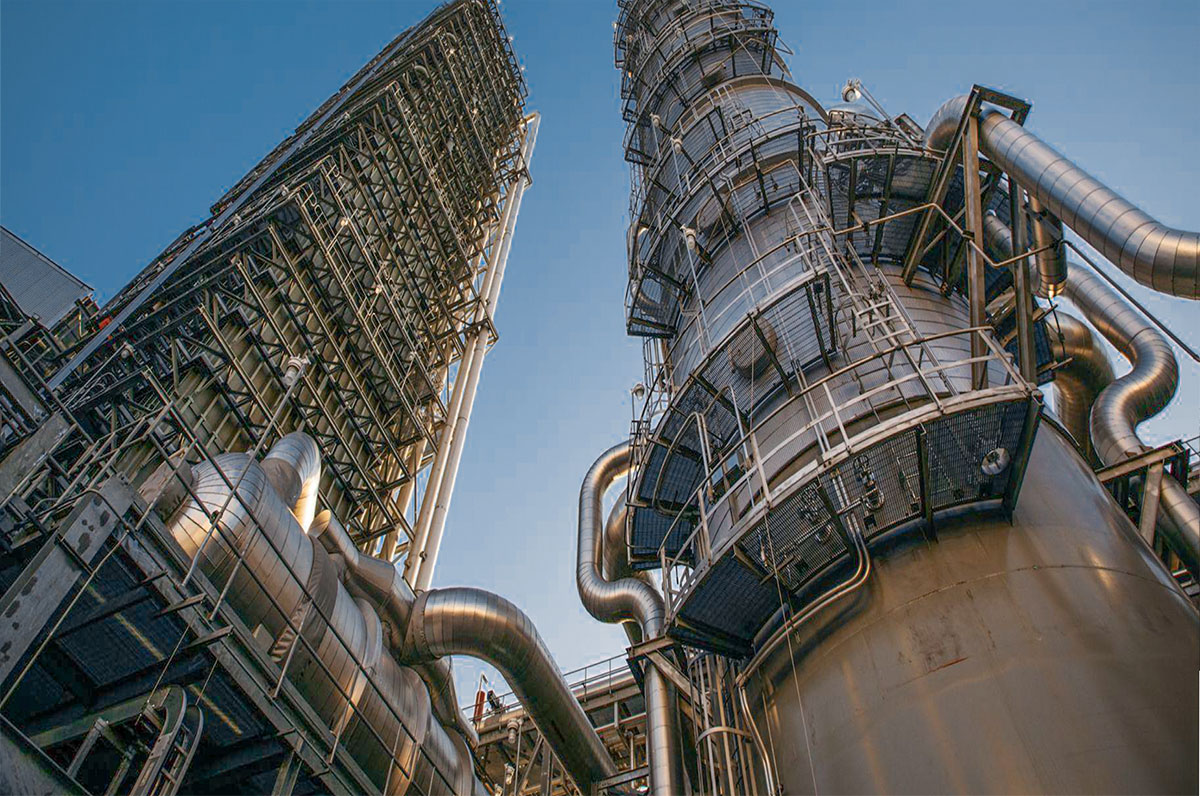
Cover Image: Amine tower at Petra Nova, NRG Parish Unit, Houston. This process captures a million tons CO2 per day from the exhaust stream of one of the Parish Unit’s generating facilities. Image: NRG Energy CC